About
Travis Kool
Backend Architect & Engineering Leader

I am a backend architect and engineering leader with fifteen years building software — most of it in the .NET ecosystem, and the last eight scaling high-stakes fintech infrastructure.
I was hired at Bitcoin IRA as its first C# engineer, joining behind the solutions architect and spending four years building the digital asset trading platform — learning the iDesign approach by practising it rather than reading about it. Over the following four years I moved from technical lead to engineering manager and backend architecture lead, ending up as one of four architects and technical leads on the architecture review board, owning backend architecture for my team of six engineers: guiding them through their service contracts, refining them, and presenting them for final review.
The work I am proudest of from that period is Instant Settlement — an in-house double-entry accounting ledger that became the platform's source of truth for balances, demoting the external ledger to an isolated downstream backup and pulling the surrounding systems and operational workflows onto it. Alongside it: limit order trading, a real-time compliance platform, and three acquisitions consolidating into one platform.
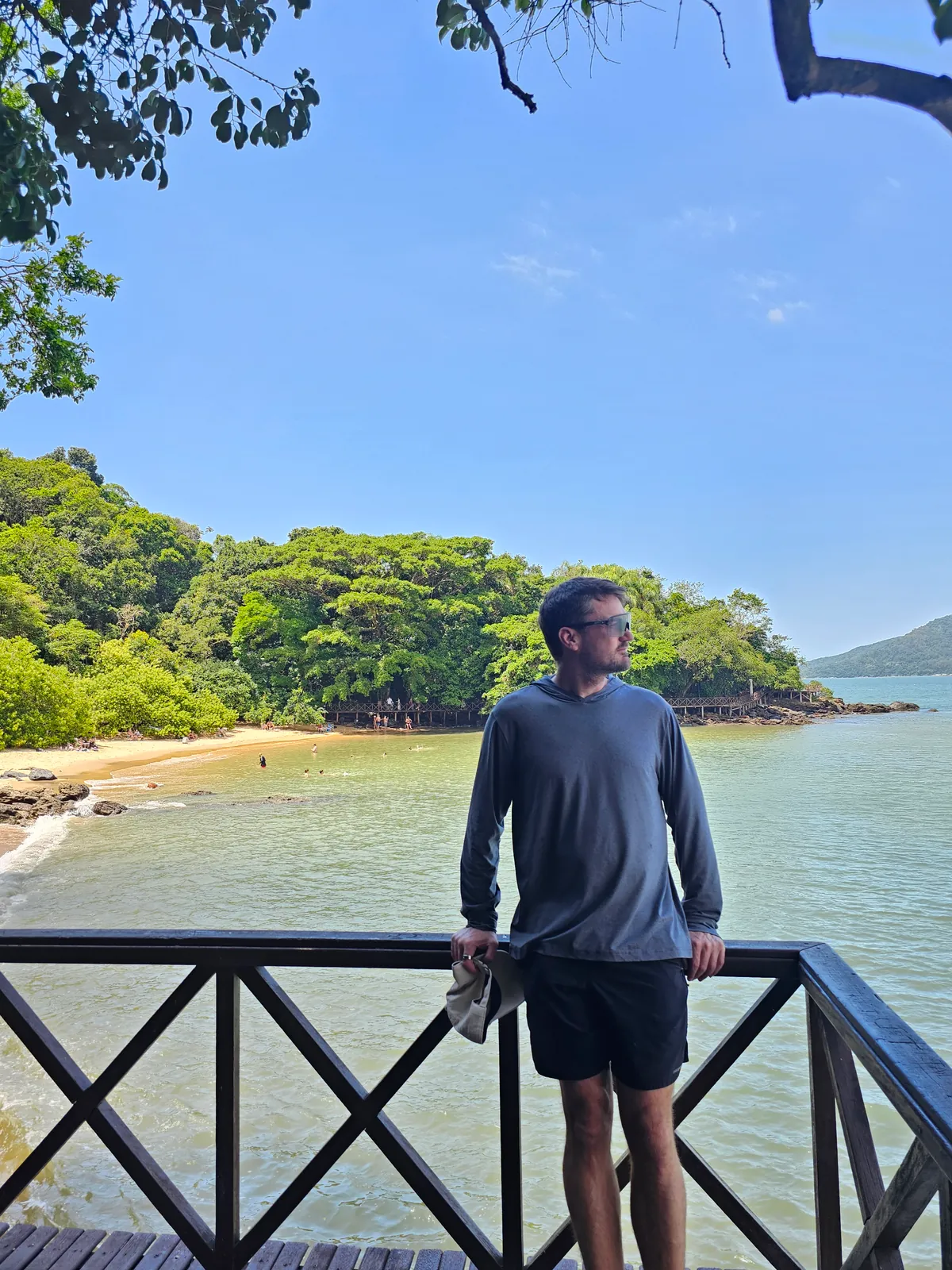
Since March 2026 I have been working independently. It started as a deliberate sabbatical, the first three months of it in Brazil, and has become a heavy competition flying season alongside building a new application end to end with agents doing the writing and the reviewing. The stretch AI-first never reached at Retired.com was the human one — writing contracts, reviewing them, reviewing pull requests — and much of that was landing on me, which is why it is the part I am working on now: whether autonomous agents can hold precision, decoupling, and long-term quality there under real velocity, rather than quietly trading them away for speed.
I hold a bachelor's degree in computer science from Sonoma State University.
What I believe
Clean code, especially now
We will read less code as agents write more of it. That makes architecture matter more, not less — an agent maintaining a system needs honest boundaries for the same reasons a person does, and it cannot walk over and ask.
iDesign architecture
Decompose by volatility, not by function. Systems organized around what changes survive the changes.
Decoupled, testable design
If it is hard to test, that is the design telling you something. Testability is also what makes velocity safe: automated verification is the one kind of review whose cost per change does not rise with volume, so it carries conformance and leaves human attention for the judgment no check can encode.
AI-first teams
Code generated by agents and reviewed by agents — given well-defined hooks, boundaries, and roles — can build large platforms that last and scale. Feature-level documentation is part of that scaffolding: it is how an agent knows what it is working on.
Away from the keyboard
I fly cross-country and competition paragliding — enough of it that it has its own section. It turns out to be the same discipline as engineering wearing different clothes: you plan carefully, you commit, and then you are honest with yourself afterwards about what actually happened.
Right now that means a season that has run more or less continuously since March — Brazil, then California, Oregon, Washington and British Columbia, and Mexico still to come — with the weeks in between spent in Nevada, outside or in the terminal.
Below is roughly the last couple of years of the away-from-the-desk half — mostly mountains and coastline, plus one cat who has been up more of them than most cats.

Rest day between tasks. 
Mornings are slower here. 

Also hikes. 
The senior engineer. 
Unimpressed by the commute.